
Scratch and Dent Zero Turn Mowers: Buy With Confidence
Scratch and dent zero turn mowers can be a good value when the damage is cosmetic, the discount is measured against the same model and local alternatives, and warranty and return terms are confirmed in writing. Compare the mower’s model year, hours, condition, and exact configuration; inspect its deck, blades, controls, frame, tires, and drive systems before paying.
Where can I find scratch-and-dent zero-turn mowers for sale?
Start by asking local mower dealers whether they have a discounted, display, or damaged unit and what caused the damage. The research sources do not provide a directory of scratch-and-dent inventory or a reliable online marketplace list, so availability must be confirmed directly with sellers. Ask whether the mower is new, previously operated, or otherwise classified differently on the sales paperwork.
Request the exact model and configuration, model year, operating hours, and a written description of every known defect. Ask to see the mower in person and have the dealer identify damage that was repaired, damage that remains, and any parts replaced. A label such as “cosmetic” is not a condition report; the visible condition and documentation matter more than the sales category.
Before arranging transport or payment, ask for the warranty statement, owner’s manual packet, return policy, and an itemized purchase quote. The Federal Trade Commission advises buyers to review warranty terms before purchasing and says federal law requires warranties to be available to read beforehand. Its guidance also recommends getting oral promises in writing because they may be difficult to enforce otherwise.
How much should a scratch-and-dent zero-turn mower cost compared with a new one?
There is no source-supported universal discount for scratch-and-dent mowers; calculate value by comparing the exact unit with the closest new and local used alternatives, then account for condition, age, and hours. A discount is meaningful only when the comparison matches the mower’s model and configuration rather than a different deck size or product tier.
Manufacturer prices provide reference points, not a complete local quote. Kubota lists Z200 residential zero-turn models with MSRPs from $5,549 to $8,699, and notes that prices and offers have conditions. Snapper lists selected 360Z models at US MSRPs of $3,399, $3,899, and $4,449; its published notice says market prices vary and setup, delivery, documentation, and destination fees are excluded. Get the dealer’s out-the-door price and compare like with like.
The LSU AgCenter’s bulletin gives historical price ranges of about $2,000 for homeowner models and $8,000–$12,000 or more for professional models. These are historical figures, not current market prices. They show why category and intended use matter, but they should not be used as today’s benchmark. For a practical comparison, list the new local price, the discounted mower’s final price, and the asking price of comparable used units, then consider model year, hours, damage, and confirmed coverage.
| Option | Who it suits | Published cost reference | Key limitation |
|---|---|---|---|
| Kubota Z200 residential mower | Buyers comparing a scratch-and-dent unit with a new residential model | MSRP starts at $5,549; listed models range to $8,699 | Price depends on model and conditions; local dealer price may differ |
| Selected Snapper 360Z models | Buyers comparing selected 360Z configurations | US MSRPs of $3,399, $3,899, and $4,449 | Market prices vary; setup, delivery, documentation, and destination fees are excluded |
| Scratch-and-dent unit | Buyers who can inspect the mower and verify written terms | Not published | Discount, condition, and applicable warranty depend on the specific unit and seller |
| Comparable used mower | Buyers evaluating a non-new alternative against the discounted unit | Not published | Local asking prices and condition are not covered by the sources |
What damage is only cosmetic, and what damage means I should walk away?
Damage is only cosmetic when it is limited to appearance and the dealer can demonstrate that the mower’s structure, controls, cutting equipment, safety devices, and drive systems function as intended. There is no source-provided checklist that classifies particular dents as harmless, so treat unexplained damage or a seller’s unsupported assurance as a reason to pause and request evaluation.
Inspect the deck for bends, cracks, and damage that could affect blade clearance; examine blades for damage and belts for cracks or wear. UF/IFAS advises checking mower belts for cracks or damage, balancing blades after sharpening because imbalance can cause excessive vibration and equipment damage, and ensuring guards, shields, seat belts, and rollover protection structures are securely in place and properly used. If a safety device is missing or cannot be secured, do not treat the unit as ready to operate.
Check the controls, frame, tires, and visible hydraulic and engine areas for damage or signs of fluid leaks. Ask the dealer to start and operate the mower so you can assess whether controls respond and whether the unit shows unusual vibration; do not remove foreign objects while the engine is running. The LSU AgCenter notes that zero-turn mowers use separate hydraulic pumps to drive the left and right tires independently, making both drive systems important inspection points. A suspected leak, damaged frame, questionable drive response, or unresolved blade vibration merits a written diagnosis before purchase; walk away if the dealer will not address it clearly.
Does a scratch-and-dent zero-turn mower still have a manufacturer warranty?
A scratch-and-dent mower may have manufacturer coverage, but the label alone does not establish that it does; the warranty statement, seller, purchase date, and exclusions determine the answer. Ask the dealer for the applicable warranty statement before paying and have the seller identify in writing whether the mower qualifies, when coverage begins, and what damage or prior repair is excluded.
The FTC advises buyers to check when warranty coverage begins and ends, who provides service, what the seller will do if the product fails, and which parts or repairs are excluded. A warranty does not necessarily guarantee a refund for a defect; the company may be allowed to attempt a repair first. That distinction makes the written return policy separate from the warranty and worth reviewing on its own.
Brand terms differ. Cub Cadet says the receipt documents the warranty start date, warranty terms and exclusions are in the warranty statement and owner’s manual packet, engines are covered by the engine manufacturer’s warranty, and battery coverage periods vary by product and brand. John Deere directs buyers to obtain the applicable equipment warranty statement from the dealer. Its 30-day return or exchange promise applies to specified lawn tractors and residential ZTrak zero-turn mowers purchased from an authorized John Deere dealer, so it should not be assumed to cover every discounted mower.
Before payment, obtain the receipt and warranty documents, written damage disclosures, repair records if applicable, and the return policy with any deadlines or exclusions. Ask specifically whether the battery, engine, and transmission are covered, who authorizes repairs, and whether the dealer’s verbal commitments are included in the paperwork. The FTC warranty guidance is useful for checking the terms; compare fit and equipment needs against New Riding Mowers: Choose the Right Fit for Your Yard when deciding whether the mower’s configuration suits your property.
Frequently Asked Questions
Are the battery, engine, and transmission covered on a discounted mower?
Coverage depends on the mower’s warranty documents and the terms for that specific product. Cub Cadet says engine coverage is provided by the engine manufacturer and battery coverage varies by product and brand; ask the dealer to identify the applicable documents and confirm coverage for all three components in writing.
What should I inspect before buying a scratch-and-dent zero-turn mower?
Inspect the deck, blades, belts, controls, frame, tires, safety devices, and signs of fluid leaks, and ask the dealer to demonstrate operation. Pay particular attention to both drive systems because the LSU AgCenter explains that zero-turn mowers use separate hydraulic pumps for the left and right tires.
Can I return a scratch-and-dent mower if it has a mechanical problem?
Do not assume a defect guarantees a refund: the FTC says a warranty may allow the company to attempt a repair first. Ask for the seller’s return policy and warranty process in writing, including any exclusions and deadlines; a return promise limited to specified products or sellers may not apply to your mower.
Is a scratch-and-dent zero-turn mower a better deal than a used mower?
The sources do not establish that one is generally a better deal. Compare the same or closest model and configuration, condition, model year, hours, written coverage, and local prices; the lower advertised price alone does not settle the comparison.
Sources
Related reading
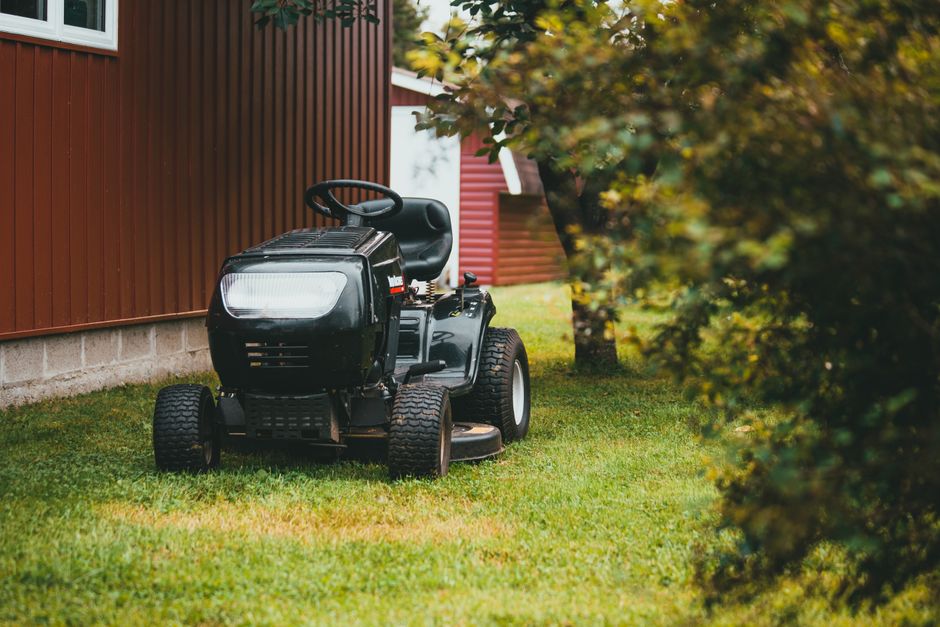
New Riding Mowers: Choose the Right Fit for Your Yard
Choose new riding mowers by matching mower type and deck width to your yard, then compare service support and total ownership costs.

Which Low-Maintenance Foundation Shrubs Fit My Home and Yard?
Choose low-maintenance foundation shrubs by matching mature size, sun, drainage, clay soil, deer pressure, and house clearance.

How Can I Improve My Front Yard Curb Appeal on a Budget?
Plan durable, low-cost front-yard upgrades that sharpen curb appeal without creating extra replacement and maintenance work.

What Garden Equipment Do I Need?
Choose garden equipment by task and garden size, starting with a few hand tools and adding specialist or powered tools only as needed.