
New Riding Mowers: Choose the Right Fit for Your Yard
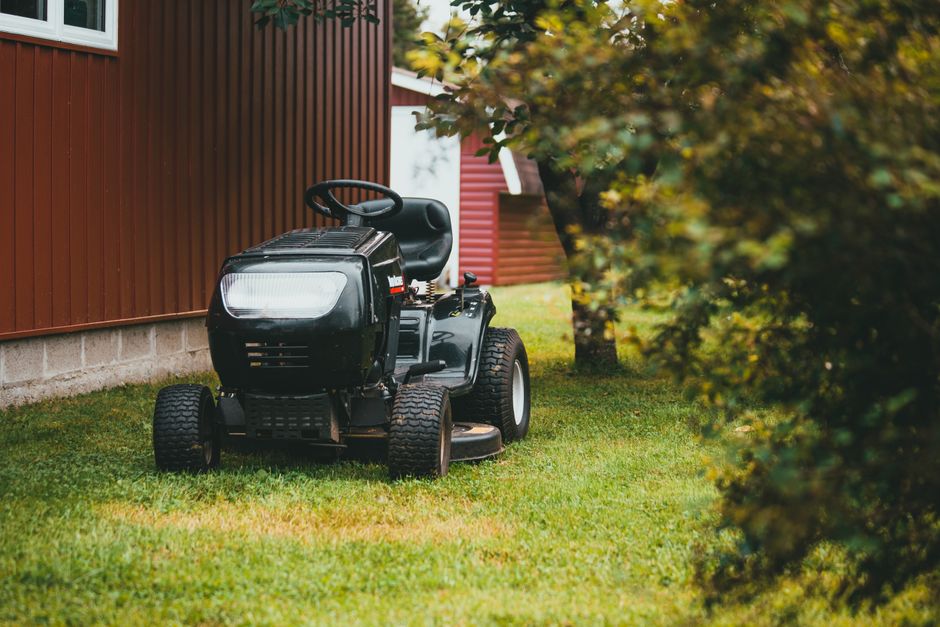
Choose new riding mowers by matching mower type and deck width to your lawn’s acreage, obstacles, slopes, and storage access, then compare power source, service support, warranty, and total ownership costs. A wider deck can reduce mowing passes on open ground, but a smaller, well-supported machine may be the better buy where access is tight or terrain is challenging.
What is the best new riding lawn mower for my yard?
The best new riding lawn mower for your yard is the one that fits the ground and work you actually have: a lawn tractor if attachments matter, a riding mower for straightforward mowing, or a zero-turn if its format suits your layout. Start with the narrowest gate, tightest turn, slope, and storage opening—not the biggest acreage number.
Deck width is a time-versus-access trade-off. A retailer guide cited in the brief suggests roughly 30–42-inch decks for up to an acre and wider decks as lawn size grows. The LSU AgCenter describes typical lawn-tractor mowing widths of 36–48 inches and notes that riding mowers commonly are no wider than about 38 inches. These ranges describe different equipment categories; they are not a universal rule that a larger deck is always better.
On open ground, a wider deck covers more in a pass. Around trees, beds, narrow passages, and uneven sections, a large machine may be harder to position and store. Measure access points and consider how much of the lawn is open before paying for additional width or horsepower. Terrain can change the choice: the U.S. Consumer Product Safety Commission identifies loss of stability as a major riding-equipment hazard, so slopes call for careful matching of the machine to the ground and attention to the operator’s manual and safety features.
Use this comparison as a screening tool. The LSU AgCenter’s descriptions distinguish equipment by intended use; purchase prices and type-specific feature details are not published in the supplied sources.
| Option | Who it suits | Cost | Key limitation |
|---|---|---|---|
| Riding mower | Primarily mowing; commonly no wider than about 38 inches in the LSU AgCenter guide | not published | Designed primarily for mowing, not broader attachment work |
| Lawn tractor | Mowing plus some attachments; typical mowing width 36–48 inches in the LSU AgCenter guide | not published | Attachment capability varies; confirm the specific machine’s support and fit |
| Lawn-and-garden tractor | Broader work, as described by the LSU AgCenter | not published | Specific capabilities and prices are not published in the supplied sources |
| 54-inch gas zero-turn in Illinois scenario | Comparison point for the fact sheet’s high-use scenario | $15,000 estimated purchase price | Scenario assumes 30 operating hours per week for 20 weeks per year |
| 54-inch electric zero-turn in Illinois scenario | Comparison point where charging and electric operation fit | $28,000 estimated purchase price | Scenario assumes 30 operating hours per week for 20 weeks per year; about three hours to charge |
The figures for the two 54-inch zero-turns come from the University of Illinois Smart Energy Design Assistance Center and are scenario-specific, not a typical homeowner quote. Its comparison estimates 14 acres per gas tank and 16 acres per electric charge, alongside annual operating costs of $2,100 and $290 respectively under its stated use and energy-price assumptions. Those figures illustrate why purchase price alone is an incomplete comparison; your actual usage and local energy costs may differ.
What riding mower has the least problems, and how can I judge reliability?
No single mower can be named the least-problem choice for every buyer; use owner-satisfaction and reliability data, then check whether you can get service and parts locally. Consumer Reports’ latest findings draw on surveys from 2023, 2024, and 2025 covering 18,560 gas riding mowers bought new between 2015 and 2025.
In that data, Kubota received exemplary reliability scores for lawn tractors, Snapper received excellent marks for zero-turn mowers, and John Deere received very good scores in both categories. These are category-specific brand findings, not a guarantee about every model or an assurance that one choice will suit every property. Consumer Reports says battery riding mowers are too new for it to provide reliability or owner-satisfaction ratings.
Check four things before comparing model names:
- Warranty: Read what components are covered and for how long. The supplied sources do not provide model-specific warranty terms, so confirm them with the seller.
- Parts: Ask whether common replacement parts are available and how they are ordered.
- Service: Confirm who performs repairs and where. The LSU AgCenter notes that dedicated equipment dealers may provide better parts support, while parts and service access for discount-store models can be more uncertain.
- Use and upkeep: Compare the maintenance demands for the actual power source and machine. The LSU guide gives broad estimated service-life ranges of about six years for rear-engine riders and lawn tractors and nine years for garden tractors, but emphasizes that operating hours and maintenance matter more than calendar years.
Consumer Reports also explains how it evaluates mower performance: its tests cover cutting 500,000 square feet across mulching, side-discharging, and bagging on level turf and slopes. Its overall ratings combine test results with predicted reliability and owner satisfaction from member surveys covering more than 62,000 mowers and tractors purchased from 2015 to 2025. That is a useful reminder: a reliability score is only one part of a purchase decision.
What is the best brand of ride-on lawn mower?
The best brand of ride-on lawn mower depends on the mower category and the support available where you live. Consumer Reports’ findings point to Kubota for lawn-tractor reliability, Snapper for zero-turn reliability, and John Deere for very good scores in both categories—but those results do not establish a universal winner across all mower types.
Use brand data as a shortlist, not a substitute for model-level checks. Compare the specific mower’s fit, warranty, parts access, and local service. Oregon State University Extension advises buyers to research options and buy the best quality they can afford; it also suggests considering whether a brand makes a commercial model. That can be one research question, but the supplied source does not claim that a commercial line guarantees residential reliability.
When you contact a dealer, ask direct questions: “Where would this mower be serviced?” “Can you confirm parts availability for this model?” “What does the warranty cover?” Those answers matter because brand reputation cannot repair a machine or supply a part by itself.
What is the newest lawn mower technology worth paying for?
Worthwhile mower technology is technology that addresses a real constraint in your routine—such as engine maintenance, fuel handling, or cutting conditions—without creating a run-time or charging problem. Electric riding mowers reduce engine maintenance compared with gas models, according to Consumer Reports, but their batteries need off-season care and protection from temperature extremes.
Compare the whole operating pattern. Oregon State University Extension notes that battery mowers have finite run time, while electric models avoid handling gas and oil. The Illinois comparison illustrates the trade-off at a specific scale: its electric 54-inch zero-turn takes about three hours to charge, with estimated operating cost and acreage per charge based on assumptions that may not match a homeowner’s use. Check the manufacturer’s stated run time and charging requirements for the exact model; the supplied sources do not provide universal homeowner ranges.
Keep the cut itself in view, too. Oregon State advises keeping blades sharp regardless of mower type. It explains that finely cut clippings can return nitrogen to the lawn when they are left without forming clumps. A feature that does not improve your mowing pattern or fit your yard may add cost without solving a practical problem.
Safety equipment deserves the same concrete check as comfort and deck design. The CPSC identifies blade contact and loss of stability as major hazards and describes operator-presence controls that stop blades when the operator leaves the control position. Its fact sheet estimated about 35,000 emergency-room-treated consumer injuries annually during 2012–2014 and an average of about 90 riding-mower deaths per year during 2008–2010. Ask how the operator-presence control works and choose a mower suited to the terrain; those figures reinforce the value of checking safe operation before purchase.
Before signing, compare the transmission, deck construction, seat and controls, safety features, warranty, parts access, service location, and expected costs for fuel or electricity and maintenance. Then measure the route from storage to lawn and identify slopes and obstacles. That short checklist turns “more horsepower” or “a wider deck” into a better question: does this specific feature solve a problem on this property?
Frequently Asked Questions
How wide should the deck be for a one-acre or three-acre lawn?
A retailer guide suggests decks around 30–42 inches for lawns up to an acre, with wider decks as lawn size grows. Treat that as a starting point: obstacles, slopes, gates, and storage access can make a narrower deck more practical. The supplied sources do not establish a specific deck width for every three-acre lawn.
Should I buy a lawn tractor, zero-turn, or electric riding mower?
Choose a lawn tractor when attachments matter, a zero-turn when its maneuverability suits the layout, and an electric rider when its run time and charging fit your mowing routine. Compare type-specific reliability data carefully: Consumer Reports reports brand results for gas lawn tractors and zero-turns, but says battery riding mowers are too new for reliability or owner-satisfaction ratings.
Is it better to buy a riding mower from a dealer or a big-box store?
A dedicated equipment dealer may offer better parts support, while parts and service access for discount-store models can be less certain, according to the LSU AgCenter guide. Compare the specific seller’s service arrangements, parts availability, warranty, and delivery or repair options before choosing.
When do new riding mowers usually go on sale, and what should I compare besides price?
The supplied sources do not identify when riding mowers usually go on sale. Alongside price, compare warranty coverage, parts and service access, transmission, deck construction, comfort, safety controls, and expected operating costs. For electric models, include charging time and off-season battery care.
Sources
- Consumer Reports, Lawn Mower Buying Guide
- Consumer Reports, Most and Least Reliable Riding Lawn Mower Brands
- Louisiana State University AgCenter, Lawn Tractor Guide
- University of Illinois Smart Energy Design Assistance Center, Electric Equipment Fact Sheet
- U.S. Consumer Product Safety Commission, Riding Lawnmower Fact Sheet
- Oregon State University Extension, Choose a Lawn Mower to Fit Your Needs
Related reading

Which Low-Maintenance Foundation Shrubs Fit My Home and Yard?
Choose low-maintenance foundation shrubs by matching mature size, sun, drainage, clay soil, deer pressure, and house clearance.

Choose the Right Seated Leg Exerciser for Strength or Mobility
Choose active resistance for voluntary leg work or a motorized mover for gentle assisted mobility, with evidence-based buying checks.

How Do I Choose Supportive Plus-Size and Curvy Swimwear That Fits?
A measurement-led guide to supportive plus-size swimwear, separate sizing, coverage, comfort, and chafing prevention for active water days.

How Can I Improve My Front Yard Curb Appeal on a Budget?
Plan durable, low-cost front-yard upgrades that sharpen curb appeal without creating extra replacement and maintenance work.