
Which Low-Maintenance Foundation Shrubs Fit My Home and Yard?
Choose foundation shrubs by working from the site outward: confirm your hardiness zone, count direct-sun hours, check drainage and eave dryness, account for deer, then match each shrub's mature height and width to windows, walls, and access space. The lowest-maintenance planting is not one universal shrub list; it is a small mix that has room to mature without constant pruning or extra watering.
What are the best low-maintenance shrubs for the front of a house?
The best low-maintenance front-yard shrubs are the ones whose listed mature size, hardiness, light, soil, moisture, and deer tolerance already match your bed. That sounds basic. It is also the difference between a shrub that settles in and one that becomes a recurring pruning project.
Use this as the site-first filter: do not begin with a favorite plant. Begin with the conditions the plant must handle. Clemson Cooperative Extension specifically recommends choosing for mature size, evergreen or deciduous habit, hardiness, pest resistance, heat tolerance, sun, soil, and moisture rather than forcing a plant into an unsuitable site.
| Site condition | Decision | Source-supported options |
|---|---|---|
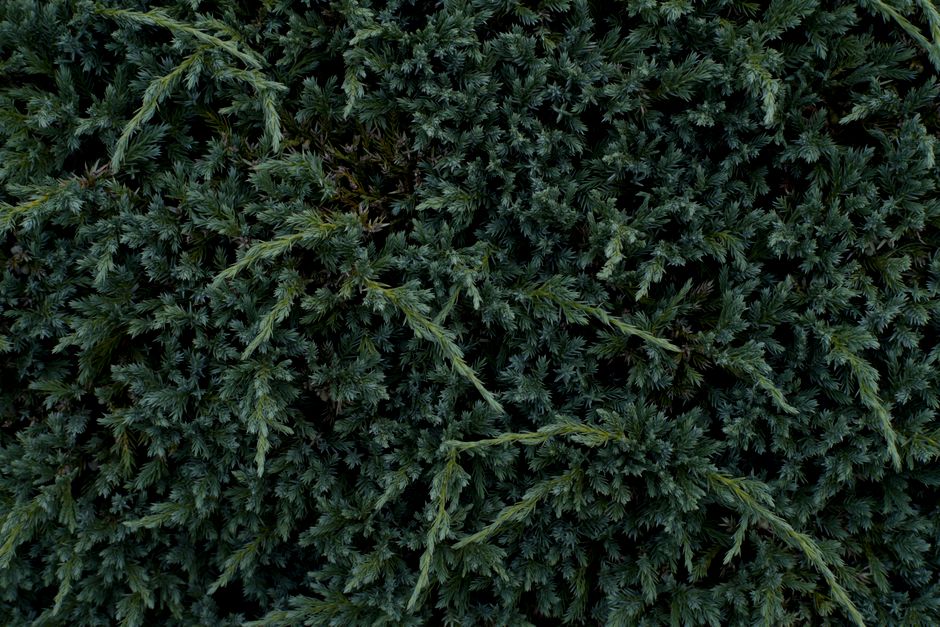
| Full sun and well-drained soil, with deer pressure | Use a shrub listed for sun, drainage, and lower deer appeal. | Chinese juniper has forms and cultivars ranging from 2 to 6 feet and is listed for full sun and well-drained soil by University of Minnesota Extension. |
| Acidic, well-drained clay soil with part shade | Use a compact Japanese holly cultivar only if heat and humidity are not a poor match for the site. | North Carolina State Extension lists Japanese holly for USDA zones 5a through 8b; many cultivars reach only 3 to 4 feet. |
| Clay soil with dry-to-periodically-wet conditions | Consider inkberry where its mature scale suits the house. | University of Maryland Extension lists inkberry holly at 5 to 8 feet tall and adaptable to all soil textures, including clay. |
| Moist, well-drained site in USDA zones 6 through 8 | Use dwarf cherry laurel rather than the full-size plant where windows need clearance. | 'Otto Luyken' cherry laurel is listed at about 4 feet tall and up to 6 feet wide; typical cherry laurel reaches 10 to 15 feet tall and 6 to 12 feet wide. |
That table is not a shopping list. It is a rejection tool. If a candidate misses one non-negotiable condition, such as drainage or mature width, reject it before it becomes work. For example, Japanese holly tolerates clay, drought, shade, and poor soil, but North Carolina State Extension also says it needs good drainage and may not thrive in high heat and humidity in the southern United States.
Build four-season interest with roles, not duplicates: one evergreen for structure, a flowering shrub only where its mature dimensions fit, and perennials kept outside the wall-clearance zone. The composition stays useful because every layer has a job. The house remains visible because no layer is asked to be a hedge, screen, and window cover at once.
How far away from my house should I plant foundation shrubs?
Plant shorter shrubs so they retain at least 3 feet of clearance from the house, and locate shrubs taller than 6 feet at maturity so their foliage stays at least 5 feet from exterior walls. Measure from the mature plant, not the container. That is the number that protects access and keeps a tidy bed from becoming a wall of foliage.
Clemson Cooperative Extension's foundation-planting guidance also says plantings within 5 to 10 feet of a foundation should be drought-tolerant, reducing the need for supplemental watering close to the house. Keep organic mulch and groundcovers at least 12 inches from the foundation so they do not create a termite bridge.
Run a quick clearance check before planting. Mark the shrub's mature width on the ground, then preserve the required space next to the wall. If the circle reaches a downspout outlet, a service route, a utility area, or the edge of a window, choose a smaller plant instead of planning to shear the problem away.
There is a second measurement worth keeping: Clemson's planting-location guidance calls for a 12- to 18-inch air gap beside the wall. This is the maintenance lane. It gives the shrub room to develop and gives you space to inspect the exterior without fighting branches.
What shrubs stay below my front windows when fully grown?
Choose shrubs whose stated mature height remains below the bottom of your windows after allowing for their planting position and the clearance space next to the wall. A dwarf cultivar is often the practical answer; a standard species that needs repeated cutting is not low maintenance.
Japanese holly offers a compact route in suitable sites. North Carolina State Extension says many cultivars mature only 3 to 4 feet tall, while the standard species can slowly reach 5 to 10 feet tall and 5 to 8 feet wide. Read both lines. The cultivar name and its mature dimensions matter more than the common name on a plant tag.
Dwarf cherry laurel 'Otto Luyken' is another scale-specific option where its zones, soil, and width work: University of Maryland Extension lists it at about 4 feet tall and up to 6 feet wide. Do not substitute typical cherry laurel merely because it is evergreen; its listed 10- to 15-foot height and 6- to 12-foot width make it a different assignment.
Use this phrase when comparing tags: “Will this fit here at maturity without a haircut?” If the answer is no, move it to a larger bed or leave it at the nursery. University of Maryland Extension puts the same principle plainly for cherry laurel: give plants enough space to mature without relying on pruning to restrict their size.
Which front-yard shrubs work in clay soil and partial shade?
Inkberry holly and Japanese holly can work in clay soil and partial shade when the rest of the site matches their needs, but drainage decides whether clay is manageable or a deal-breaker. Inkberry is the broader soil-tolerance option; Japanese holly still needs good drainage.
University of Maryland Extension lists inkberry holly for full sun through full shade, all soil textures including clay, and dry through periodically wet soil. It is also listed as deer-resistant and suitable for foundation planting. Its 5- to 8-foot listed height means it belongs in a bed with enough room, not automatically beneath a low window.
Japanese holly tolerates full sun to partial shade and clay soil, according to North Carolina State Extension. Its compact cultivars can solve a window-scale problem, but do not confuse clay tolerance with tolerance for standing water. The source's good-drainage requirement still applies.
Test the site before choosing either. Clemson's method uses a hole 12 inches deep and 12 inches wide: drainage of about 2 inches per hour is ideal, 1 inch or less per hour is poor drainage, and 4 inches or more is excessively fast. Clay and compacted soil create more runoff than sandy soil, while poor internal drainage can deprive roots of oxygen and promote root rot. This is the drainage gate: choose the shrub after you know what water does in the bed.
Also inspect the roofline. Clemson Cooperative Extension notes that plants under eaves can receive little or no rainfall when gutters are present. A bed can have clay soil and still run dry under an overhang. Site conditions do not arrive one at a time.
Finish with a simple field drill: write down the direct-sun hours, drainage result, wall clearance, window-bottom height, and deer pressure for each front bed. Then compare only shrubs that clear every line. That small sheet prevents years of corrective pruning, extra watering, and replacement planting.
Frequently Asked Questions
What evergreen shrubs are deer resistant?
Inkberry holly and cherry laurel are listed as deer-resistant by University of Maryland Extension, while Chinese juniper appears on the University of Minnesota Extension deer-resistant list. Deer resistance is not deer proof: Minnesota Extension says even a 50% reduction in browsing is very successful, so high-pressure sites still need physical protection and other management.
Should I use only evergreen shrubs in a foundation planting?
No. Clemson recommends choosing for mature size, hardiness, pest resistance, heat tolerance, sun, soil, and moisture conditions, not selecting a plant type first and forcing it into the site. Use evergreens where year-round structure serves the house, then add flowering shrubs or perennials only where their site needs and mature size fit.
How do I choose shrubs for a south-facing front of the house?
Start by measuring direct sun: Clemson defines full sun as at least 6 hours and full sun to partial sun or partial shade as about 3 to 4 hours. A southern exposure is warmest in winter, so pair that exposure with the shrub's listed light, hardiness, moisture, and mature-size requirements, and check whether eaves leave the bed dry.
Sources
- Clemson Cooperative Extension Home & Garden Information Center: Foundation Plantings
- Clemson Cooperative Extension Home & Garden Information Center: Choosing a Planting Location
- University of Maryland Extension: Inkberry Holly
- University of Maryland Extension: Cherry Laurel
- North Carolina State Extension Gardener Plant Toolbox: Japanese Holly
- University of Minnesota Extension: White-Tailed Deer Damage
Related reading
How Do I Compare Local Landscaper Quotes Before Hiring?
Compare landscaping quotes fairly, verify credentials, spot missing scope, and secure a detailed written contract before hiring.