
How Do I Choose Modern Eyeglass Frames That Suit Me?
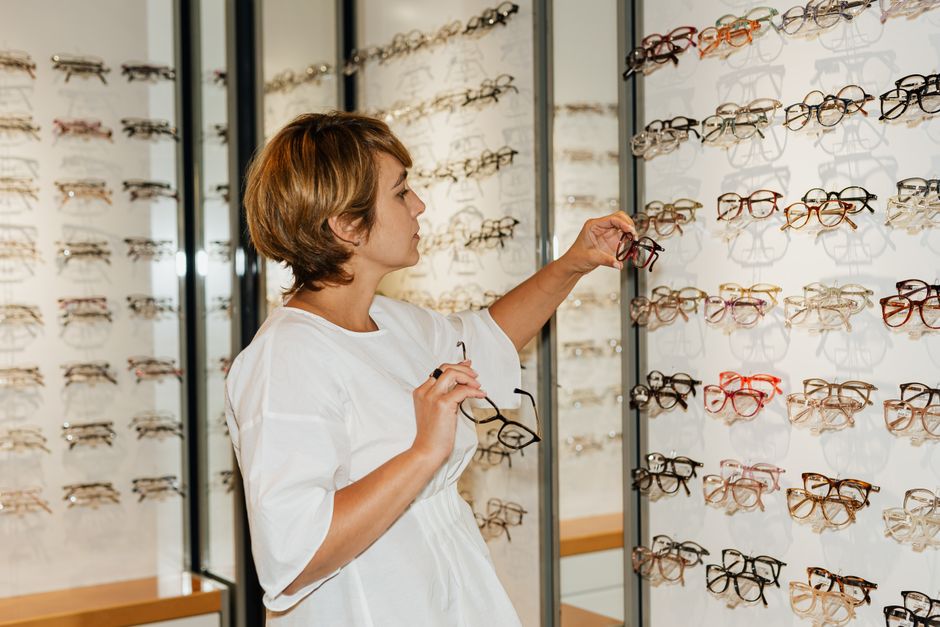
Choose modern eyeglass frames by fitting the frame to your prescription, face proportions, and daily routine before considering the trend. Current options include thick oversized shapes, thin wire frames, transparent colors, geometric forms, and cat-eyes, but the best choice keeps your pupils well centered, rests securely on your nose, and does not add unnecessary lens weight.
What eyeglass frames look modern right now?
Modern eyewear is split between two deliberately different directions: substantial, supersized frames and small, thin wired opticals. That apparent contradiction is useful. It means a current-looking pair does not require committing to one prescribed silhouette; the frame can be quiet and precise or visibly architectural.
Vogue Singapore's 2025 eyewear report identifies thick oversized frames, thin wire styles, oversized aviators, angular geometries, and cat-eye forms as active directions. Harper's Bazaar reaches a compatible conclusion, pointing to barely-there frames, transparent or softly tinted PVC, mixed materials, large futuristic shapes, and sharply upswept cat-eyes.
The practical interpretation is straightforward: use the trend as a vocabulary, not a command. A thin wire frame can bring structure without dominating the face. A clear or softly tinted frame can read lighter than a dark acetate shape. A geometric or cat-eye frame can create intentionality when a rounder face needs visual angles. Oversized frames make the strongest statement, but they also create the greatest prescription trade-off.
| Style direction | What it communicates | Prescription question to settle first |
|---|---|---|
| Thin wire | Restrained, precise, lightly retro | Does the lens shape and size keep the prescription practical? |
| Clear or softly tinted | Low-contrast, contemporary, visually light | Will the bridge and nose contact keep the frame stable? |
| Geometric or cat-eye | Defined angles and a more deliberate outline | Do the lens edges and pupil position remain well aligned? |
| Oversized acetate or aviator | Bold, fashion-forward presence | Is the frame larger than the prescription needs require? |
Style works when it is compatible with the optical job. A frame that looks current but repeatedly slides down the nose eventually becomes a design failure.
How do I choose glasses that suit my face shape?
Choose glasses that suit your face by matching the frame's width, bridge, lens depth, and visual lines to your actual proportions, then checking that the prescription sits in the intended location. Face-shape labels can help you compare outlines, but they are a starting hypothesis rather than a fitting method.
Start with width. A frame should not create persistent temple pressure, and it should not be so loose that it shifts on the nose. The 2022 Scientific Reports study on myopic-glasses fitting identifies frame width, nose-pad fit, temple fit, pupil-distance alignment, and eye-to-lens distance as measurable variables in comfort and optical fit. In its model, temple angles above 9 degrees produced serious tightness, while 3 to 6 degrees produced suitable tightness and good comfort.
Then inspect the bridge. If the bridge is too broad or the nose pads do not meet the nose securely, the frame can fall and change the lens position relative to the eyes. That is not merely irritating. The study warns that an improperly designed myopic frame can fall from the nose, altering its relationship to the face and affecting corrective vision.
Finally, use shape as a visual adjustment rather than a rulebook. Angular frames and upswept cat-eyes add directional lines; rounded lenses soften a more angular look; a low-contrast clear frame recedes where dark acetate announces itself. Try these options with your usual work and outdoor clothing in mind. The goal is not to "correct" a face shape. It is to choose an outline whose proportions do not compete with the rest of the face.
Are oversized eyeglasses still in style?
Yes, oversized eyeglasses are still in style, particularly in thick, futuristic, bug-eyed, and aviator-inspired forms, but they are not the default choice for every prescription. Vogue Singapore reported oversized silhouettes across fall/winter 2025 runways, and Harper's Bazaar described large futuristic forms as part of the same fashion direction.
The data has a different story when prescription strength enters the frame. The American Optometric Association's clinical guideline says that, to reduce spectacle thickness and weight, frames should be strong but lightweight, no larger than necessary for facial size, and selected so their frame pupillary distance approximates the wearer's interpupillary distance. For a high prescription, a large lens opening can be a costly aesthetic choice in thickness and weight.
This does not ban large frames. It establishes the order of decisions: first confirm lens design and centration with an eye-care professional or optician; then select the largest frame that still serves those requirements. For severe myopia, the AOA specifically recommends small eye sizes and round lens shapes, alongside high-index lenses, thick eyewires, dark frames, and anti-reflection coatings. Trend awareness should not override that guidance.
How should prescription and lifestyle shape the final choice?
Prescription and lifestyle should shape the final choice because the frame is part of the optical system, not a separate accessory. The National Eye Institute describes eyeglasses as the safest and simplest way to correct refractive errors, while distinguishing single-vision lenses from multifocal options such as bifocals, trifocals, and progressives. Lens purpose changes what a useful frame looks like.
For everyday distance or near correction, comfort and visual preference may carry most of the decision. For multifocal lenses, lens depth and stable placement deserve more scrutiny because the lens contains zones for different viewing distances. The National Eye Institute notes that an eye doctor supplies the prescription after an exam and an optician helps select frames and purchase glasses; use both roles for what they are designed to do.
For prescriptions generally above 6 diopters, the AOA says high-index materials or aspheric designs should be considered, although benefits can be noticeable from 3 diopters. Its myopia guidance adds a second constraint for severe cases: carefully derived interpupillary-distance measurements and vertex-distance adjustment are necessary, because poor centration can induce significant prism and the distance from eye to lens affects the final prescription.
A reliable final sequence is therefore compact: establish the prescription and lens type, try frame widths and bridges until the frame is stable, verify pupil alignment and comfort, then decide whether the color and silhouette belong in your daily life. That is how a modern frame remains modern after the first week.
Frequently Asked Questions
Should I choose clear, wire, or tortoiseshell frames?
Choose clear frames when you want a light visual effect, thin wire frames when you prefer a restrained and technical look, and tortoiseshell when you want more visible contrast around the face. Harper's Bazaar identifies transparent, softly tinted frames and barely-there silhouettes as current directions, while Vogue Singapore identifies thin wired opticals as a parallel trend. The deciding factor should be whether the color and material work with your wardrobe and prescription, not whether one material is more current than another.
What frames work best with strong prescription lenses?
For severe myopia, the American Optometric Association recommends small eye sizes, round lens shapes, high-index lenses, thick eyewire frames, dark frames, and anti-reflection coatings to reduce weight and improve appearance. Its clinical guidance also says high-index materials or aspheric designs should be considered for prescriptions generally above 6 diopters, with benefits sometimes noticeable from 3 diopters. Accurate pupil-distance measurement and a frame that sits correctly matter as much as the visible frame style.
How can I tell if glasses are too wide or too narrow for my face?
A frame is not properly sized if it slips down, pinches at the temples, or places the lenses poorly relative to your pupils. A 2022 Scientific Reports fitting study treats frame width, nose-pad fit, temple fit, pupil-distance alignment, and eye-to-lens distance as measurable parts of optical comfort. Have an optician assess the fit rather than treating a labeled frame size as a verdict; the study's adult reference examples illustrate that individual facial dimensions vary.
Sources
- American Optometric Association: Clinical Practice Guideline 17
- American Optometric Association: Care of the Patient with Myopia
- National Eye Institute: Eyeglasses for Refractive Errors
- Scientific Reports: A Study on the Fitting of Myopic Glasses
- Vogue Singapore: Eyewear Trends in 2025
- Harper's Bazaar: Eyewear Trends 2025