
Used Dump Truck Cost: Build a Defensible First-Year Budget
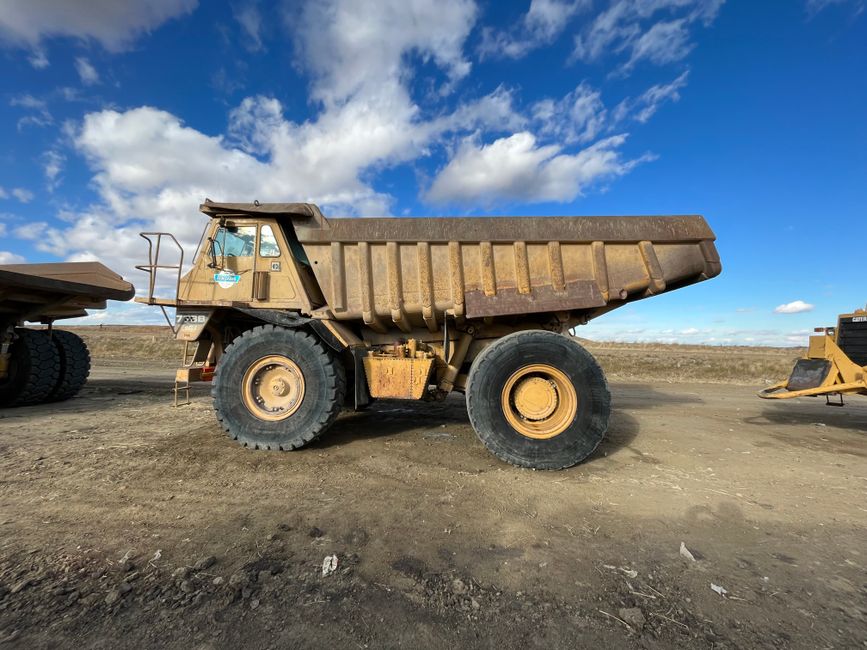
The real cost of a used dump truck is not a single purchase-price number: it is the acquisition price plus financing, insurance, inspection, repairs, tires, fuel, registration, and the cash needed to survive downtime. The supplied research does not publish a universal dump-truck price range, so the defensible method is to compare like-for-like trucks and budget operating costs before treating any listing as affordable.
How much should I expect to pay for a used dump truck?
You should expect to pay a market-specific acquisition price plus a first-year operating budget; the research provided here does not publish a reliable universal dollar range for used dump trucks. That absence matters. A low advertised price can be meaningful only when the competing trucks share the same basic specification, condition, age, mileage, emissions equipment, and selling channel.
ACT Research identifies age, mileage, model, vehicle specification, credit conditions, emissions timing, freight demand, new-truck availability, and the retail, wholesale, or auction channel as value drivers for used commercial trucks. Its research is focused chiefly on Class 8 tractors rather than dump trucks, but the valuation discipline transfers: a single asking price is not a market value. Comparable sold units are more useful than a collection of unlike listings.
Channel creates a second puzzle. In October 2024, Sandhills Global reported used-dump-truck asking prices down about 6% year over year while auction values were down about 14%. That gap does not prove that every dealer listing is overpriced. It does show why an advertised retail number should be tested against auction movement rather than accepted as the final market verdict.
| Option | Who it suits | Cost evidence | Key limitation |
|---|---|---|---|
| Dealer or retail listing | Buyer comparing advertised trucks | Used dump-truck asking prices were down about 6% year over year in Sandhills' October 2024 analysis | Asking prices can lag auction-market movement |
| Auction purchase | Buyer using auction data as a market signal | Auction values were down about 14% year over year in the same analysis | Auction value is not automatically the final cost after inspection, repairs, and operation |
| Private sale | not published | not published | not published |
| Lease-to-own | not published | not published | not published |
| SBA 7(a) equipment financing | Operating, for-profit U.S. small businesses that are creditworthy and able to demonstrate repayment ability | 7(a) loans may finance equipment and working capital; the program maximum is $5 million | Approval is not automatic, and applications go through participating lenders |
Then build the first-year model in separate lines: purchase or financing payment, commercial-auto insurance, registration, inspection, repair and maintenance, tires, fuel, and downtime. The American Transportation Research Institute found that the average cost to operate a truck was $2.251 per mile and $90.78 per hour in 2022. This is not a dump-truck-specific quote and it is not a substitute for your own route, payload, and utilization assumptions. It is a warning against a familiar accounting error: treating the payment as the business model.
Several components moved sharply in that ATRI dataset: fuel costs rose 53.7%, truck and trailer payments rose 18.6%, repair and maintenance rose 12.0%, and tire costs rose 9.8%. Small fleets also spent 7.7 cents more per mile than large fleets. A new owner-operator should therefore preserve working capital instead of committing every available dollar to the truck itself.
Is a single-axle or tandem-axle dump truck better for a new owner-operator?
Neither axle configuration is categorically better for a new owner-operator because the supplied sources do not publish a single-axle-versus-tandem cost, capacity, or suitability threshold. Select the configuration that matches the work you can document, then compare similarly configured trucks; otherwise, the comparison confuses specification with condition and price channel.
Configuration is not cosmetic. ACT Research explicitly names vehicle specification as a used-truck value driver, while its framework also separates retail, wholesale, and auction pricing. A single-axle truck and a tandem-axle truck therefore should not be placed in the same price set merely because both have dump bodies. The useful question is narrower: which configuration matches the operating work, and what do comparable trucks in that configuration cost through the same channel?
Run the decision in this order: establish the work requirement, identify the axle configuration that requirement calls for, compare bodies and emissions equipment, then compare age, mileage, condition, and channel. Financing comes after that analysis, not before it. The SBA states that 7(a) financing can support machinery and equipment as well as working capital, but eligibility requires an operating, for-profit U.S. business that is creditworthy and can demonstrate a reasonable ability to repay. The loan is a funding mechanism, not evidence that a particular truck is economical.
Insurance belongs in the configuration decision as well. The Texas Department of Insurance classifies dump trucks as non-trucker commercial-auto risks and reports that pricing varies by vehicle size, business use, industry, operating territory or radius, liability limits, deductibles, fleet size, and rating modifications. Ask for a quote tied to the actual truck and intended operation before using a payment estimate to judge affordability.
What mileage and engine hours are too high for a used dump truck?
No mileage or engine-hour figure is universally too high in the supplied research; condition, maintenance evidence, age, model, specification, emissions timing, and sales channel must be assessed together. A claimed threshold without those facts is false precision.
Start with maintenance records and a thorough inspection, then use mileage and engine hours as questions rather than verdicts. Do the records support the truck's stated condition? Does the physical inspection reveal defects in the systems that actually bear the work? The federal annual inspection report provides an unusually practical baseline: service and parking brakes, drums or rotors, hoses and tubing, low-pressure warning devices, steering, suspension, frame members, tires, wheels and rims, fuel-system leaks, tank attachment, lighting, exhaust, coupling devices, and safe loading.
For a dump truck, that baseline is necessary but incomplete. Have a qualified technician evaluate the dump body, hoist, hydraulic cylinders, PTO, and subframe. These are not optional decorative checks; they are the components that convert a road-going truck into a working dump truck. A clean cab or a favorable odometer cannot substitute for evidence about them.
Use inspection findings to price the next decision: buy, negotiate, or walk away. The federal report is designed around whether the vehicle has passed specified annual inspection items under 49 CFR 396, not around a private buyer's preferred mileage number. That distinction is useful. Compliance-oriented inspection establishes a floor; a buyer still needs to decide whether the purchase price leaves enough cash for the repairs, insurance, fuel, tires, and downtime that can follow.
Frequently Asked Questions
What should I inspect before buying a used dump truck?
Use the Federal Motor Carrier Safety Administration annual vehicle inspection report as the starting point: brakes, steering, suspension, frame, tires, wheels, fuel system, lighting, exhaust, coupling devices, and safe loading all belong on the review. A qualified technician should also evaluate the dump body, hoist, hydraulic cylinders, PTO, and subframe, because those vocational components are central to a dump truck's working condition.
How much money do I need beyond the truck's purchase price?
The research does not provide one universal cash-reserve amount. Your first-year budget should separately account for financing payments, commercial-auto insurance, registration, repairs and maintenance, tires, fuel, inspections, and downtime; ATRI's 2022 carrier data reported $2.251 per mile and $90.78 per hour in average operating cost, which illustrates the scale of expenses outside acquisition.
Can I finance a used dump truck with a new business?
A new business can apply through an SBA participating lender for 7(a) financing, which may be used for equipment and working capital, but approval is not automatic. The SBA says the business must be operating, for-profit, creditworthy, and able to demonstrate a reasonable ability to repay the loan; assess the payment alongside the operating cash the truck will require.
The purchase decision becomes clearer when the budget is treated as a proof rather than a hope: comparable market evidence establishes the acquisition case, inspection establishes the condition case, and a first-year operating model establishes whether the business can carry the truck. If any one of those cases is missing, the listed price is not yet a buying decision.
Sources
- Federal Motor Carrier Safety Administration Annual Vehicle Inspection Report
- American Transportation Research Institute, An Analysis of the Operational Costs of Trucking
- Texas Department of Insurance Commercial Auto Biennial Report
- U.S. Small Business Administration 7(a) Loans
- Sandhills Global Used Dump Truck Market Analysis
- ACT Research Used Truck Price Forecast