
Build a Capable Mechanic Tool Set Without Buying Too Much Too Soon
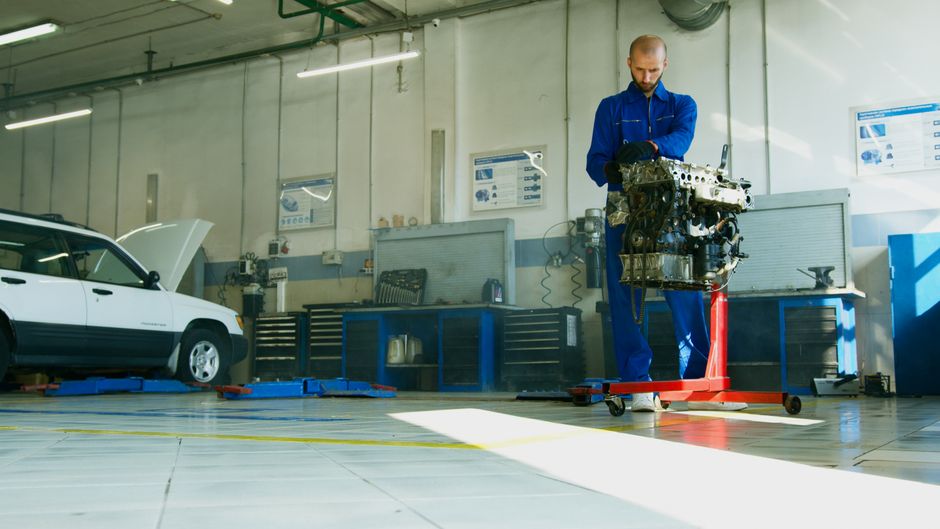
Build your mechanic tool set in stages: buy the hand tools, safety gear, measuring tools, and basic electrical testers used on first-job work; use employer or school equipment for jacks, hoists, power tools, and major diagnostic hardware; then add specialty tools only when recurring work justifies them. This sequence matches automotive training standards and prevents a large upfront purchase from becoming an expensive collection of rarely used tools.
What tools does a beginner mechanic need first?
A beginner needs a compact foundation for fasteners, inspection, fluid service, and basic electrical diagnosis before buying specialty tools. The U.S. Bureau of Labor Statistics draws the ownership line plainly: technicians typically own common hand tools such as wrenches, pliers, sockets, and ratchets, while employers usually own computerized diagnostic equipment, power tools, jacks, and hoists.
That division is a buying principle, not merely an inventory list. Early work commonly includes oil changes, fluid checks, tire rotations, brake-pad work, wheel-bearing work, and sensor replacement. Each job repeatedly uses the same ordinary tools; a specialty puller bought for a hypothetical future repair does not.
For a concrete first-year baseline, Anoka Technical College prioritizes 3/8-inch and 1/2-inch metric socket sets, ratchets, extensions, a breaker bar, a 15-250 ft-lb torque wrench, 10-19 mm combination wrenches, pliers, screwdrivers, pry bars, and a 12-volt incandescent circuit tester. Its list also includes ANSI Z87.1 safety glasses, hearing protection, tire-pressure and tread-depth gauges, an air chuck, inspection mirror, magnetic pickup tool, gasket scraper, and a tool cart no taller than 40 inches.
Add basic electrical capability early, not as an afterthought. ASE's entry-level Electrical/Electronic Systems tasks require use of a digital multimeter for source voltage, voltage drop, current flow, and resistance, along with a test light, fused jumper wires, and wiring diagrams. A tool set that can remove a component but cannot test the circuit around it is incomplete.
How much should a new mechanic budget for tools?
A new mechanic should budget in stages rather than treat a full professional inventory as the opening purchase. Alfred State College estimates $3,000-$8,000 for student tools and a toolbox, with cost varying substantially by brand and place of purchase. That is a published program estimate, not a rule that every student must spend the maximum before performing entry-level work.
The more useful question is: what work will the first budget support? A student budget should first cover the minimum hand-tool and safety list required by the training program. A lube-technician budget should concentrate on the fastener, torque, inspection, and fluid-service tools used in routine maintenance. An entry-level general-technician budget can then add measuring and electrical tools, followed by the task-specific items that actual assignments demand.
This is also how formal programs organize the problem. The ASE Education Foundation states that the student hand-tool list covers all program levels, while other tools and equipment must be available through the training program. Its 2026 standards separate Maintenance & Light Repair, Automobile Service Technician, and Master Automobile Service Technician levels. The implication is blunt: competence expands in layers, so purchases should too.
| Option | Who it suits | Published cost | Key limitation |
|---|---|---|---|
| First-year minimum hand-tool set and cart | Students starting foundational automotive instruction | Not published | Does not include Anoka Technical College's later second-year additions such as impact tools and brake-service tools |
| Student tools and toolbox inventory | Automotive Service Technician students following Alfred State College's program list | $3,000-$8,000 | Cost varies by brand and place of purchase |
| Employer-owned diagnostic and lifting equipment | Technicians working where an employer supplies shop equipment | Not published | Availability depends on the employer or workplace |
| Multi-brand scan-tool access | Mechanical or collision repair shops serving more than one vehicle brand | Not published | Does not replace the need for OEM access when a repair calls for it |
Should I buy a pre-made mechanic tool set or individual tools?
Buy a pre-made set when it supplies the core hand tools on your required list without forcing you to pay for tools you will not yet use; buy individual tools when a set misses required sizes, torque tools, testers, or safety equipment. The correct unit of comparison is coverage of near-term work, not the apparent size of the box.
A modular approach usually resolves the false choice. Start with sockets, ratchets, extensions, wrenches, pliers, screwdrivers, pry bars, and the relevant safety equipment. Then fill gaps individually: torque wrenches, a tire-pressure gauge, a tread-depth gauge, a test light, and a digital multimeter serve defined tasks that broad starter sets often do not fully cover.
Delay the second-wave items until the work requires them. Anoka places impact tools, impact sockets, external Torx drivers, a second torque wrench, flare-nut wrenches, brake-service equipment, an oil-filter-wrench kit, and an ignition spark tester on its second-year list. Alfred State's senior list similarly adds quick-disconnect tools, a vacuum gauge, hose-clamp pliers, a serpentine-belt tool, axle sockets, a puller kit, and inverted Torx sockets. These are not bad purchases. They are purchases with a sequence.
The scan-tool question follows the same logic. ASE requires technicians to retrieve diagnostic trouble codes, monitor status, and freeze-frame data, and to perform active actuator tests and interpret graphing data for engine-performance diagnosis. Yet the Bureau of Labor Statistics says employers usually own computerized diagnostic equipment. Learn on the available equipment first, then determine whether personal ownership is required by the job.
MEMA Aftermarket Suppliers reports a unified industry position that shops are best served by access to both OEM and multi-brand scan tools. It also concludes that multi-brand tools can be economically sensible, while buying individual OEM tools for each brand can be cost-prohibitive. Access is the first decision; ownership is the later one.
The practical endpoint is simple: maintain a written gap list. After each assigned job, record the missing tool, whether the shop supplied it, and whether that task is likely to recur. Buy from repeated evidence, not imagined future need.
Frequently Asked Questions
Which mechanic tools are worth buying from premium brands?
The supplied sources do not publish a brand-by-brand premium buying recommendation. They do establish that common hand tools are typically technician-owned, so durability and fit matter most for the tools used constantly: sockets, ratchets, wrenches, pliers, screwdrivers, and torque wrenches. Compare the actual tool requirements of your program or employer before paying more; brand alone does not determine whether a tool belongs in the first purchase.
What specialty tools should I wait to buy until I need them?
Wait on tools tied to narrower repair categories, including puller kits, axle sockets, serpentine-belt tools, quick-disconnect tools, hose-clamp pliers, inverted or external Torx tools, and specialized brake or oil-filter kits. Anoka Technical College and Alfred State College place many such items in later lists, while ASE standards separate student hand tools from equipment a training program must provide. Buy one when the work appears repeatedly or when your employer requires personal ownership.
Do entry-level automotive technicians need their own scan tool?
Not necessarily. The Bureau of Labor Statistics says employers usually own computerized diagnostic equipment, while ASE certification tasks make clear that technicians must know how to retrieve codes, read freeze-frame data, run active tests, and interpret scan-tool data. Learn the workflow and confirm your workplace policy before buying; MEMA reports that multi-brand scan tools can be economically sensible, whereas purchasing individual OEM tools can be cost-prohibitive.
Sources
- U.S. Bureau of Labor Statistics, Occupational Outlook Handbook
- ASE Education Foundation, Automobile Program Standards
- Anoka Technical College, Automotive Technology Tool List
- Alfred State College, Automotive Service Technician Required Tools
- National Institute for Automotive Service Excellence, Automobile Study Guide
- MEMA Aftermarket Suppliers, Scan Tool Access Position