
Under-Desk Pedal Exercisers: Useful Leg Activity Without Overclaiming
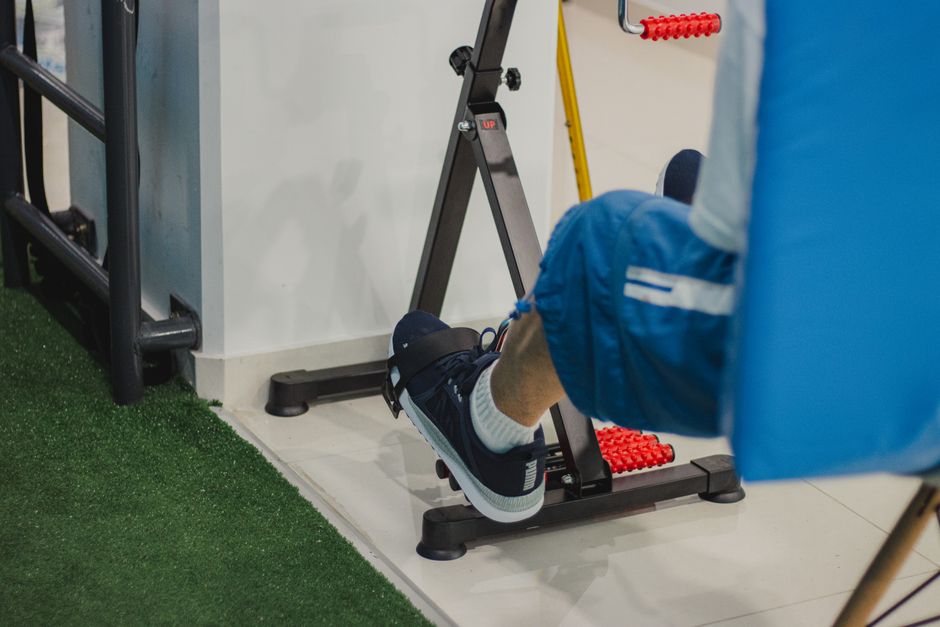
An under-desk pedal exerciser can add low-intensity leg movement and raise energy expenditure during seated work, but it is not a substitute for dedicated leg-strength training or a stand-alone weight-loss method. The strongest evidence supports a comfortable, low-workload start for inactive desk workers; it also shows that fit, resistance, and session length determine whether the machine remains useful rather than becoming a source of knee or ankle discomfort.
Do under-desk pedal exercisers actually strengthen your legs?
Not reliably on their own: under-desk pedaling is supported as seated activity, while the available evidence does not establish it as sufficient leg-strength training. The U.S. Centers for Disease Control and Prevention distinguishes aerobic activity from muscle-strengthening activity: strengthening work is performed at an intensity where another repetition becomes difficult without help, and it needs to cover major muscle groups, including legs and hips, on at least two days each week.
The more defensible promise is movement during time that would otherwise be entirely sedentary. A randomized laboratory experiment in Medicine & Science in Sports & Exercise compared seated under-desk pedaling at 17 W and 25 W with sitting without pedaling among 96 physically inactive adults aged 20 to 65. The study reported energy expenditure about 70 to 90 kcal per hour above sedentary sitting, while typing, reading, logical reasoning, and phone-task performance were equivalent across conditions.
That result resolves the central puzzle. Pedaling can make sitting less inert without converting an office chair into a leg-strength station. The experiment also found more ergonomic comfort at 17 W than at 25 W, and more than 95% adherence to the planned workloads. Low effort is not a failure of the device; in this use case, it is the condition that makes sustained use plausible.
The ceiling matters as much as the benefit. A two-hour office-worker study in Applied Ergonomics found clinically meaningful increases in knee and ankle discomfort during under-desk cycling compared with sitting, with no evidence of muscle fatigue. If discomfort emerges, the evidence supports treating it as a setup, cadence, resistance, or duration problem rather than treating discomfort as proof of productive exercise.
Is a mini exercise bike better than an under-desk elliptical?
The published evidence supplied here supports seated cycling, not a general verdict that a mini exercise bike is better than an under-desk elliptical. That distinction is not pedantic. A product comparison needs measurements of motion, clearance, stability, resistance range, noise, and price; the supplied studies do not publish those comparisons.
What the research does establish is a decision principle: select the activity intensity that fits the work being done. In the randomized seated-pedaling experiment, task performance was equivalent at 17 W and 25 W. By contrast, the Applied Ergonomics simulated-office study found that 40 W and 80 W produced physiological responses corresponding to moderate activity, but typing time increased during both conditions even though errors and cognitive performance did not change. Higher effort therefore belongs in periods when speed matters less.
| Option | Who it suits | Cost | Key limitation |
|---|---|---|---|
| Under-desk pedal exerciser | Physically inactive adults aged 20 to 65 were participants in the seated-pedaling experiment. | Not published | Knee and ankle discomfort was greater during two hours of under-desk cycling than during sitting. |
| Under-desk elliptical | Not published | Not published | Not published |
| Walking pad | Not published | Not published | Not published |
| Full exercise bike | Not published | Not published | Not published |
The table is deliberately incomplete because public data in the supplied sources do not cover these consumer-product comparisons. A walking pad is a distinct alternative rather than a proven upgrade within this evidence set; anyone weighing it against seated movement may also find Choose Stylish Sandals That Stay Comfortable All Day relevant to the separate question of walking comfort.
Do not treat the display on a compact cycle as a laboratory instrument. In a 10-person typing study, the tested cycle overstated actual power by 14% to 138%, according to Applied Ergonomics. The device can still be useful; its calorie and power readouts simply cannot serve as precise measurements.
Can I lose weight using a pedal exerciser while sitting?
A pedal exerciser can contribute activity that affects energy expenditure, but the evidence does not support presenting seated pedaling as a stand-alone weight-loss treatment. The Medicine & Science in Sports & Exercise experiment frames its estimated 70 to 90 additional kcal per hour as a strategy to reduce sedentary time and help prevent weight gain, not as a guaranteed weight-loss mechanism.
The federal Physical Activity Guidelines for Americans state that adults benefit from moving more and sitting less, with replacing sedentary behavior with light activity as a useful first step. The same guidance states that body weight reflects both physical activity and calorie intake, and that combining calorie restriction with physical activity is generally more beneficial for weight loss than calorie restriction alone.
For context, the Guidelines describe 150 to 300 minutes of moderate-intensity aerobic activity per week as the range for substantial health benefits, while the CDC defines moderate intensity as effort that raises breathing and heart rate enough to permit talking but not singing. The under-desk studies do not establish that every seated-pedaling session reaches that threshold. The practical conclusion is blunt: count the machine as a way to accumulate movement, then assess intensity by the established definition rather than by a screen's calorie estimate.
A conservative desk-break routine follows directly from the evidence: begin with comfortable pedaling, reserve higher resistance for work that does not demand rapid typing, and stop or alter the setup if knee or ankle discomfort develops. The research supports that sequence; it does not publish a universal duration, resistance dial position, desk height, or rehabilitation protocol.
Frequently Asked Questions
Why does my pedal exerciser slide across the floor?
The provided research does not identify why a pedal exerciser slides or publish a tested remedy for floor movement. Its practical implication is narrower: if movement changes the pedaling position or contributes to discomfort, the setup no longer resembles the controlled seated conditions studied in the research.
What resistance level should I use on an under-desk bike?
No universal resistance setting is established by the provided studies, but the 17 W workload produced greater ergonomic comfort than 25 W among inactive adults in the randomized Medicine & Science in Sports & Exercise study. The same research found that 40 W or more produced greater perspiration and may be less suitable for office work; resistance, comfort, and the task being performed therefore change the answer.
Will a pedal exerciser fit under my work desk?
The provided sources do not publish a universal clearance measurement or product dimensions, so fit cannot be inferred from this evidence alone. A meaningful check requires the specific machine's dimensions, the desk's open space, and a seated position that does not create knee or ankle discomfort.
Sources
- Medicine & Science in Sports & Exercise / PubMed Central
- Applied Ergonomics / PubMed: cycling workstation and typing study
- U.S. Centers for Disease Control and Prevention: What Counts as Physical Activity for Adults
- Physical Activity Guidelines for Americans
- Applied Ergonomics / PubMed: moderate cycling during office tasks
- Applied Ergonomics / PubMed: under-desk cycling discomfort study
Disclaimer: This article is for general information only and is not medical advice. It is not a substitute for diagnosis or treatment by a qualified healthcare professional. Always speak to your doctor before acting on anything you read here.